360 Degree Feedback

How are leaders and employees perceived? Uncover their strengths & development needs?

What is 360 degree feedback?

360 degree feedback is a process where individual employees receive feedback from people they work with. Mostly, the feedback process is provided anonymously and confidentially. Typically, the people providing feedback include the participant’s manager, staff who report to the participant, their peer group and other stakeholders they closely interact with.

Survey Space software includes 360 degree feedback survey templates for a range of roles. Customised surveys can also be set up easily for any type of 360 project .

Feedback helps people succeed

360 Degree feedback confirms where people are perceived to be performing well. It also provides insight into perceptions about where they may need to develop new skills, become more effective or change the way they behave, act or communicate.

Our recommendation about the 360 degree feedback aims:

360 degree feedback should be used for development and not as a performance appraisal tool.
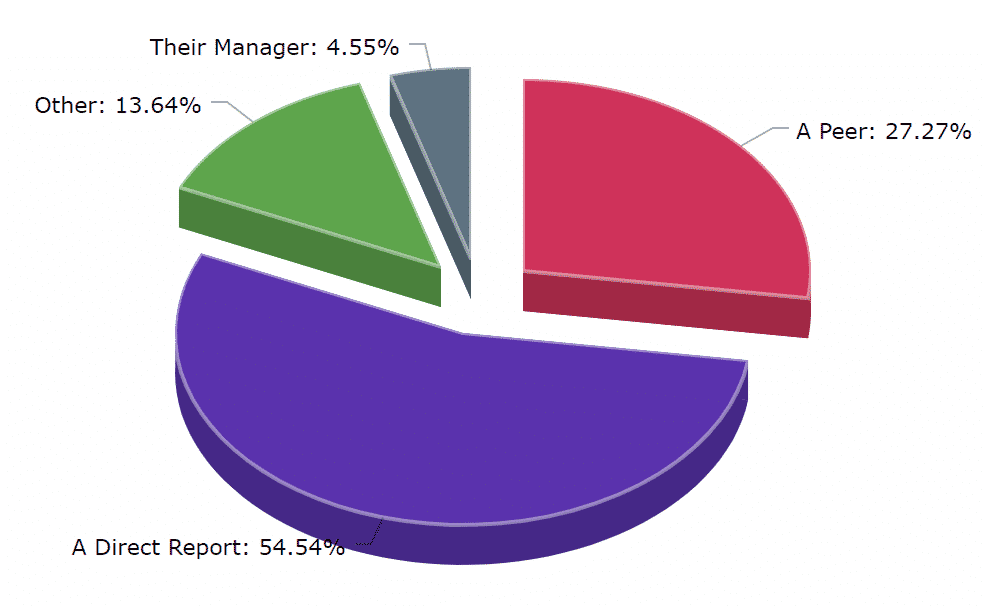
360 Degree Feedback Rater Selection

What can 360 degree feedback be used for?

  • Measure competencies, skills, behaviours and actions
  • Assess how other people, and different groups of people, perceive the participant
  • Assess skills like delegation, conflict management and time management
  • Identify perceptions about the participant’s emotional responses to situations
  • Identify perceptions of the gaps between expected performance and actual performance
  • identify and agree the participant’s perceived development needs
  • Creating and agreeing development plans
  • Developing actions to address incorrect perceptions by specific groups of raters
  • Informing the development of coaching and development programs

Ingredients for a successful 360 feedback process

  • Create the right context for people to give feedback
  • Clear policies – who sees the feedback, who owns the feedback report, who chooses the raters, minimum rater numbers
  • Establish clear goals and objectives for the 360 degree feedback process
  • Design a quality survey and communications
  • Pilot the survey and the communications
  • Brief participants about the aims, objectives, policies and process
  • Engage the targeted survey respondents and communicate the aims and policies to them very clearly
  • Ensure anonymity and confidentiality policies are met
  • Choose people whose feedback will be valued by the 360 degree feedback participant
  • Support with experienced facilitation, coaching and programs
  • Support the participants with development opportunities
  • Help the participants to share their feedback insights with their colleagues and staff

Why is 360 degree feedback important?

  • Most people typically suffer from a lack of feedback at work
  • Feedback can be highly motivating and focuses attention
  • It is difficult to find time for true self-reflection in a busy work life
  • Feedback is the quickest, cheapest and most motivating development tool available
  • Feedback improves self awareness and minimizes ‘our blind spots’
  • Giving and receive feedback are essential skills

360 degree feedback aims

  • Allows people to get insight into how they are perceived by others
  • Gives insights into strengths as well as development opportunities
  • The process should focus on development and improvement, not appraisal
  • The feedback can inform development discussions and planning
  • Builds a collective feedback focus

What are the benefits of 360 degree feedback?

  • Enhances personal and collective awareness
  • Develops confidence as it highlights strengths
  • Focuses people on their opportunities for improvement
  • Seeks to provides feedback in important performance areas
  • Ensures that development activity is informed
  • Builds a feedback culture that promotes open feedback

360 feedback is a catalyst for action

  • Feedback provides a focus and a change opportunity
  • It provides confirmation about whether an individual is on track or not
  • The process eliminates ignorance as an excuse
  • Focuses individuals on actions they can take to change behaviour or manage perceptions
  • Creates a Case for Change
Survey Software